Industry
Healthcare
Client
Product Design
Creating safe healthcare connections for the LGBTQ+ community
CHALLENGE
Healthcare that hurts instead of heals
LGBTQ+ people face real barriers getting healthcare. Stigma and bias from providers lead to delayed care and worse health outcomes. People avoid doctors rather than risk judgment or discrimination. GLMA: Health Professionals Advancing LGBTQ Equality and the Tegan and Sara Foundation knew they needed more than just a provider list. They needed a tool that felt safe, authentic, and actually worked—not another clinical directory that missed the mark on community needs.
APPROACH
Community-centered design that met technical reality
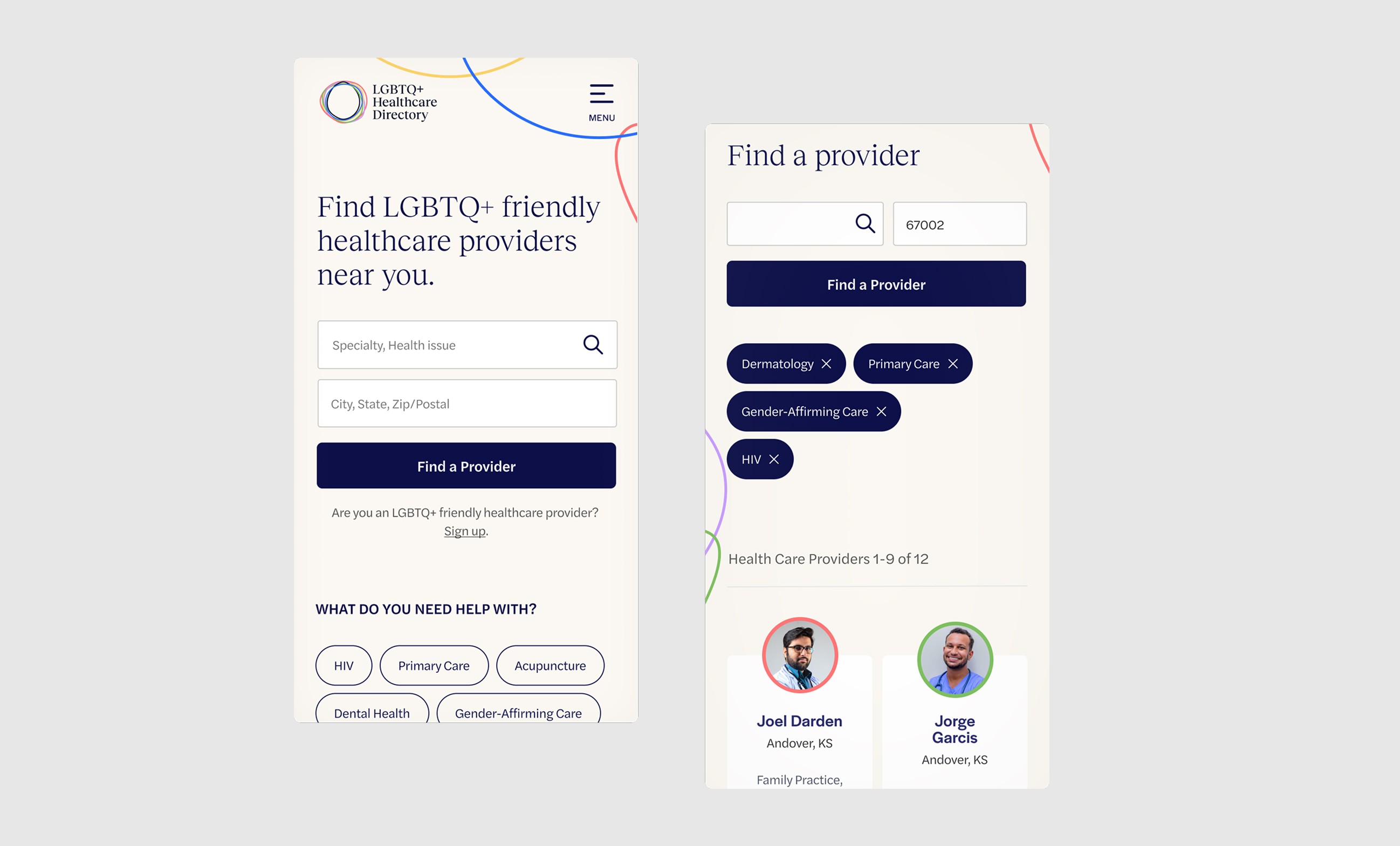
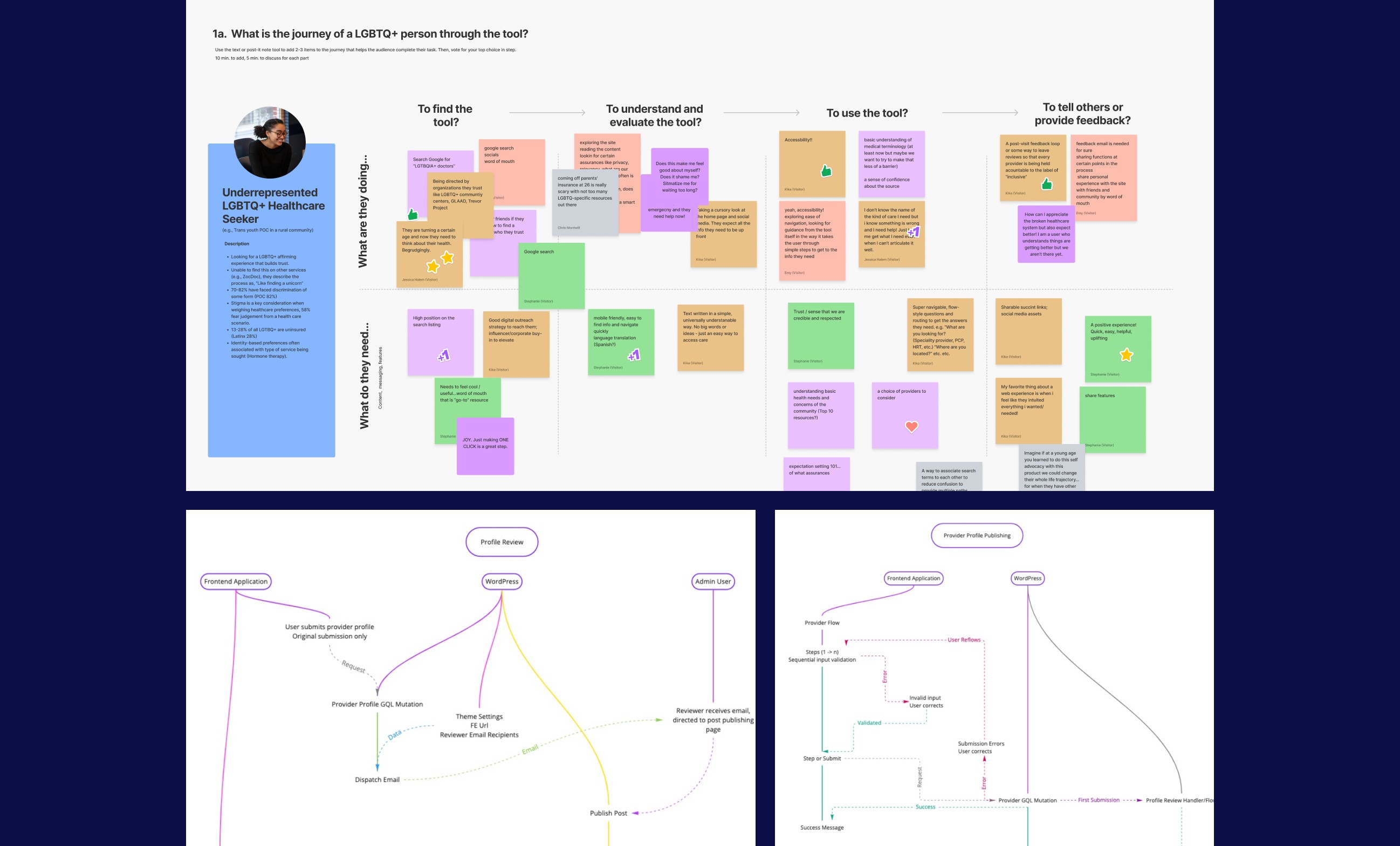
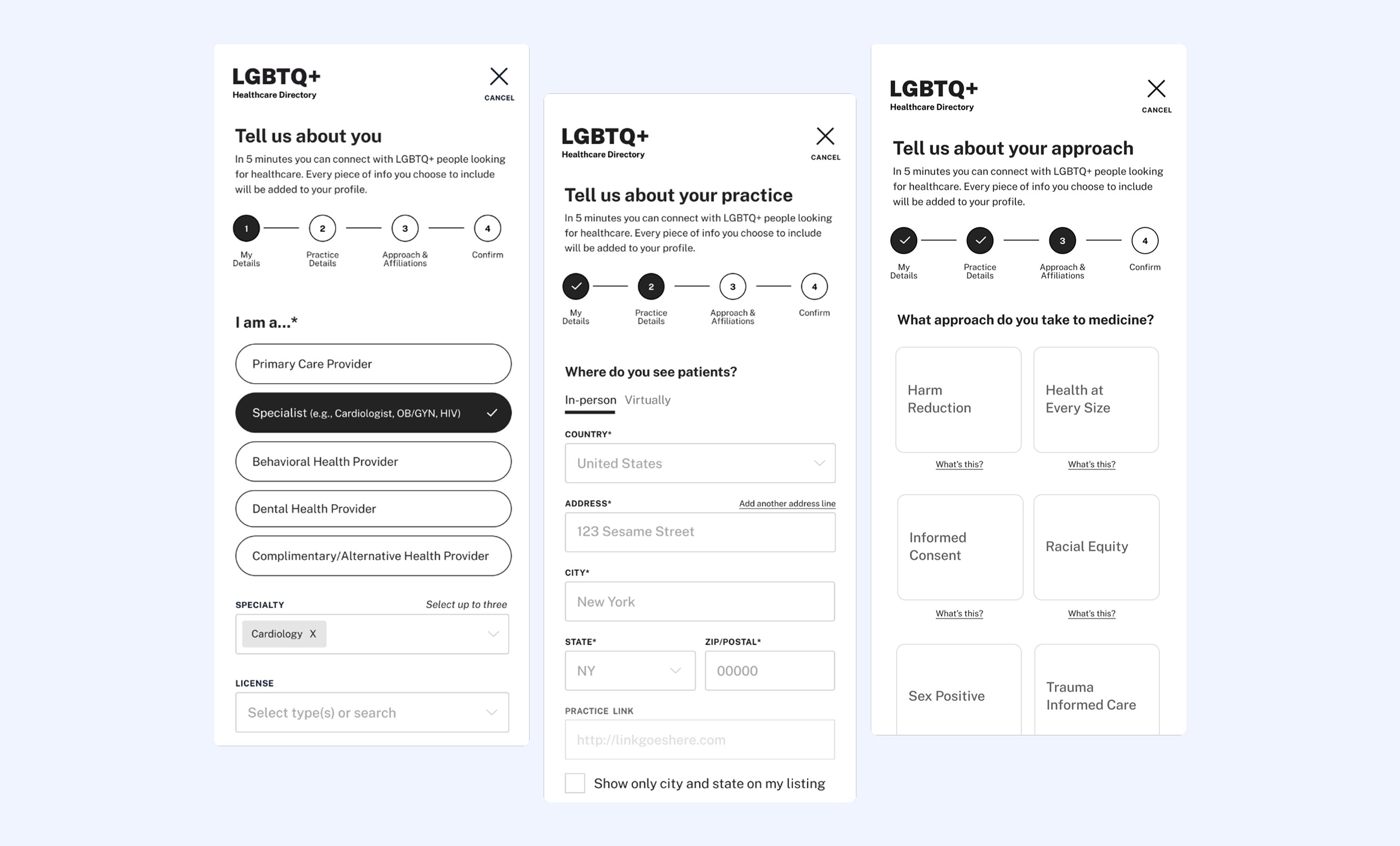
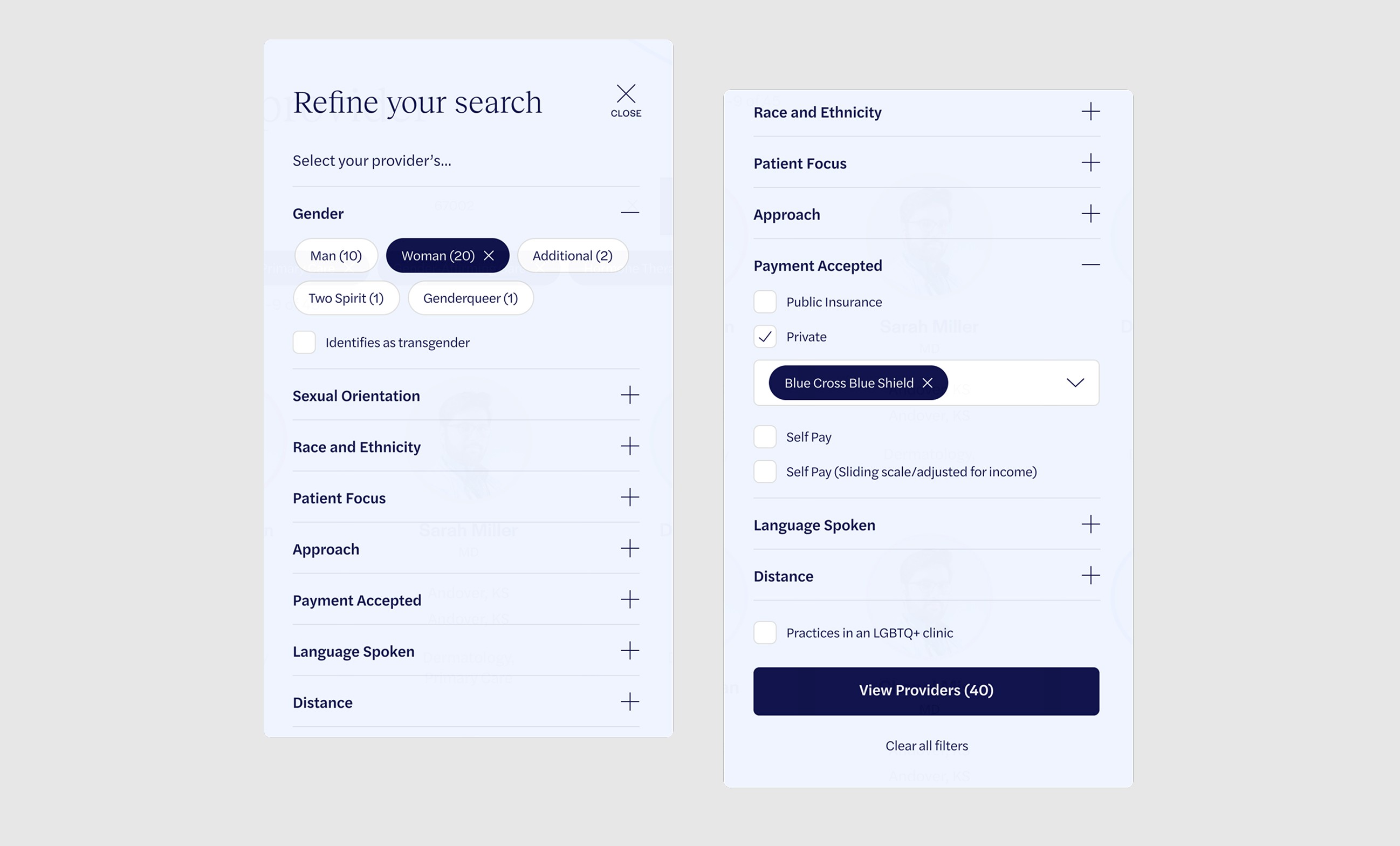
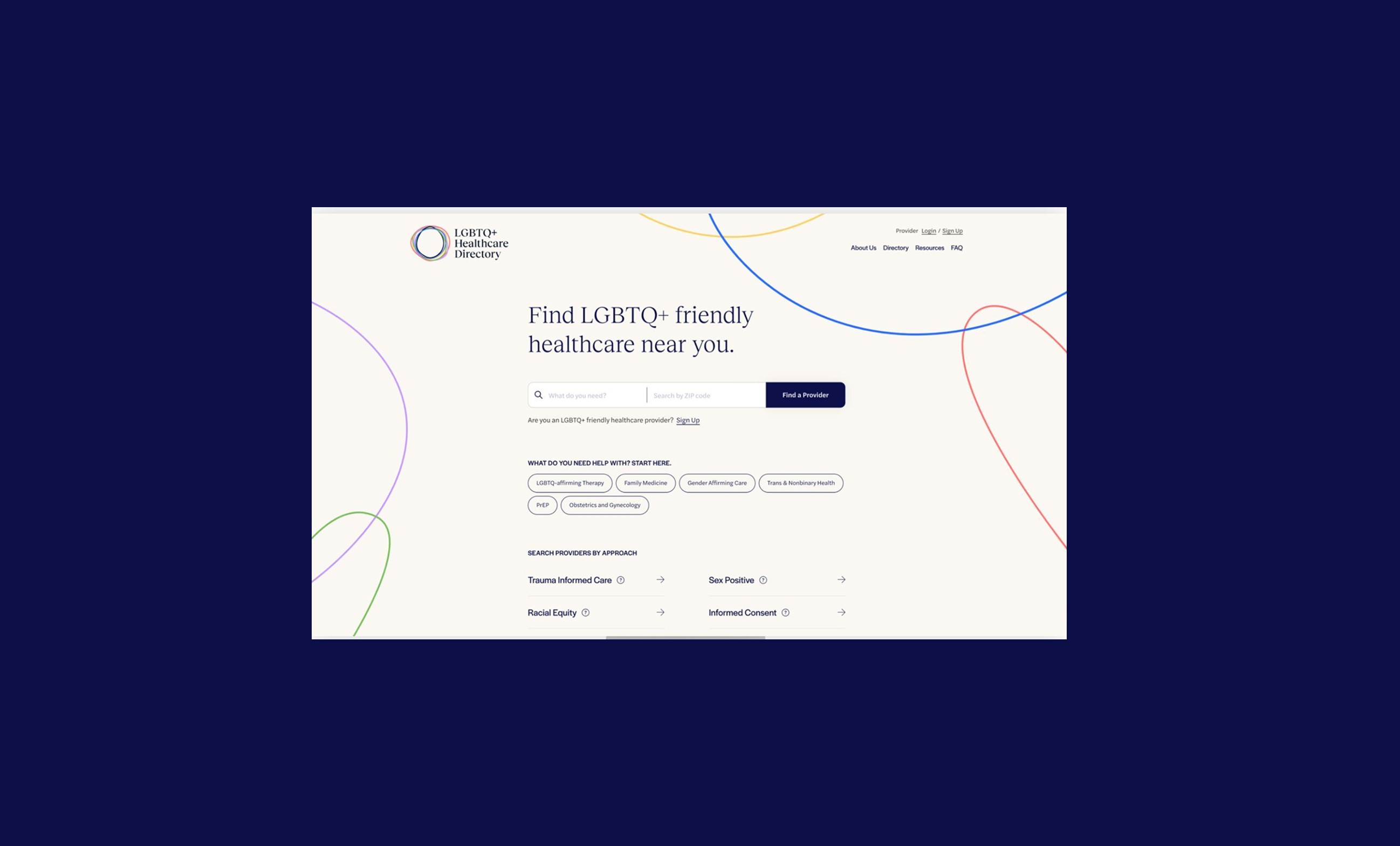
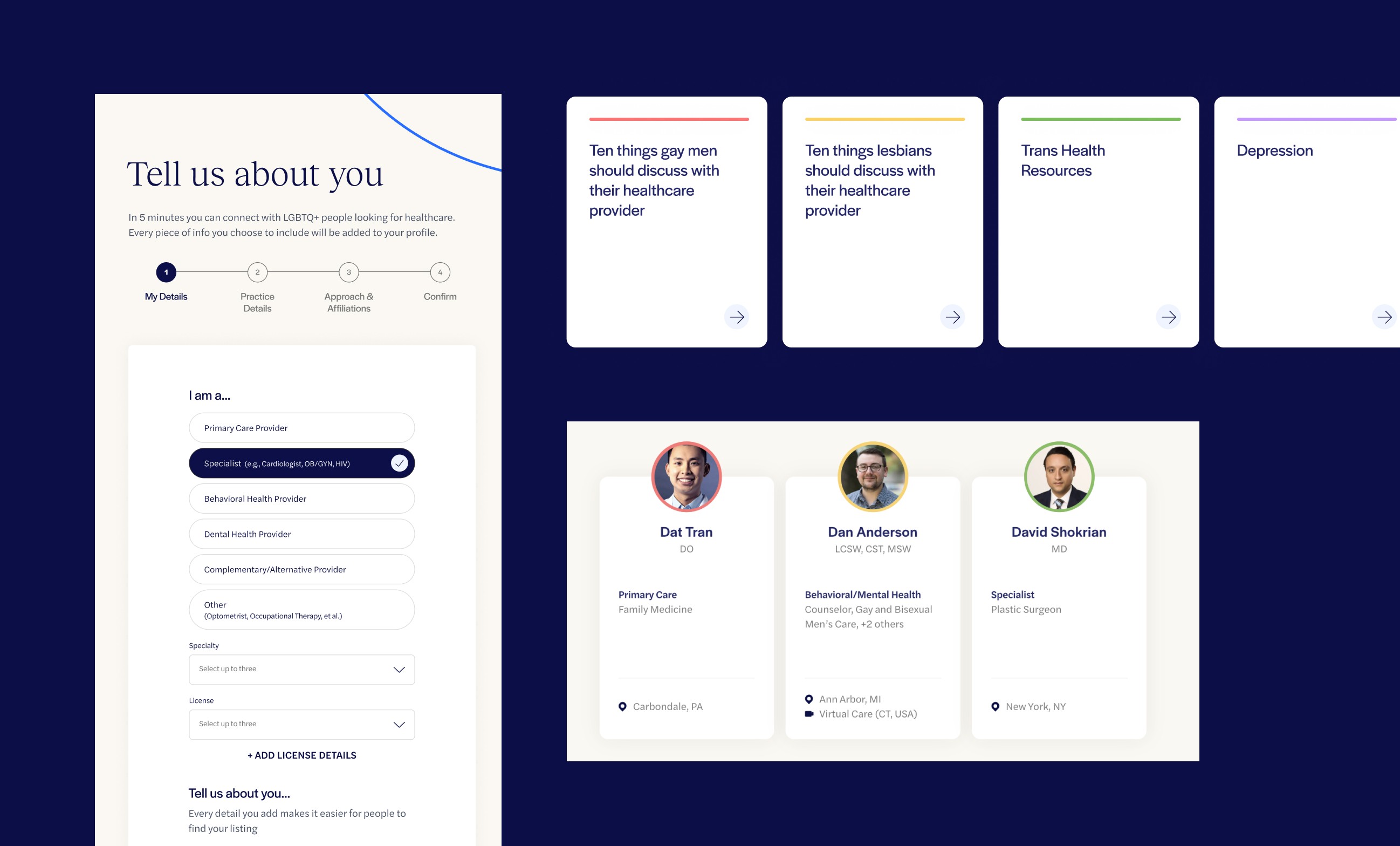
We put LGBTQ+ community voices at the center of every design decision. The brand needed to feel authentic without falling into healthcare's typical sterile trap. Visual elements showed connection and crossed paths—reinforcing positive interactions. But building trust meant solving the chicken-and-egg problem: users need providers, providers need users. We had to create a platform that worked for both sides while making the sign-up process smooth enough to actually build that robust network of trusted professionals. We tested with community members throughout development from user workshops to hallway testing. Every interaction, from search to connection, was designed for comfort and speed. The language invited engagement without medical jargon that creates distance. However, storing provider records securely and integrating with the GLMA directory to increase credibility required some attention to the data flow. Working with IT and engineering teams to sketch out a clear information flow ensured we followed the right protocol and still made the experience fast.
OUTCOME
Real connections
The directory launched with over 5,500 provider profiles and achieved a 9% contact conversion rate. Patients were finding providers they could trust. More than numbers, we created a tool that changes how LGBTQ+ people approach healthcare. Instead of fear and avoidance, the directory offers hope and connection. It proves that good design can save lives by removing barriers to essential care.