Industry
Healthcare
Client
Product Design
Making Medicare reporting feel less like government paperwork
CHALLENGE
Good policy trapped in bad user experience
In 2017, Medicare changed how doctors get paid—shifting focus to quality care over quantity of services. Great policy change. Terrible execution reality. Clinicians needed to report quality activities, track performance measures, and understand their scores. But government reporting tools typically feel like punishment, not progress. Doctors already spend too much time on paperwork instead of on patients. The new system risked making that worse, not better.
APPROACH
Commercial software feel meets government requirements
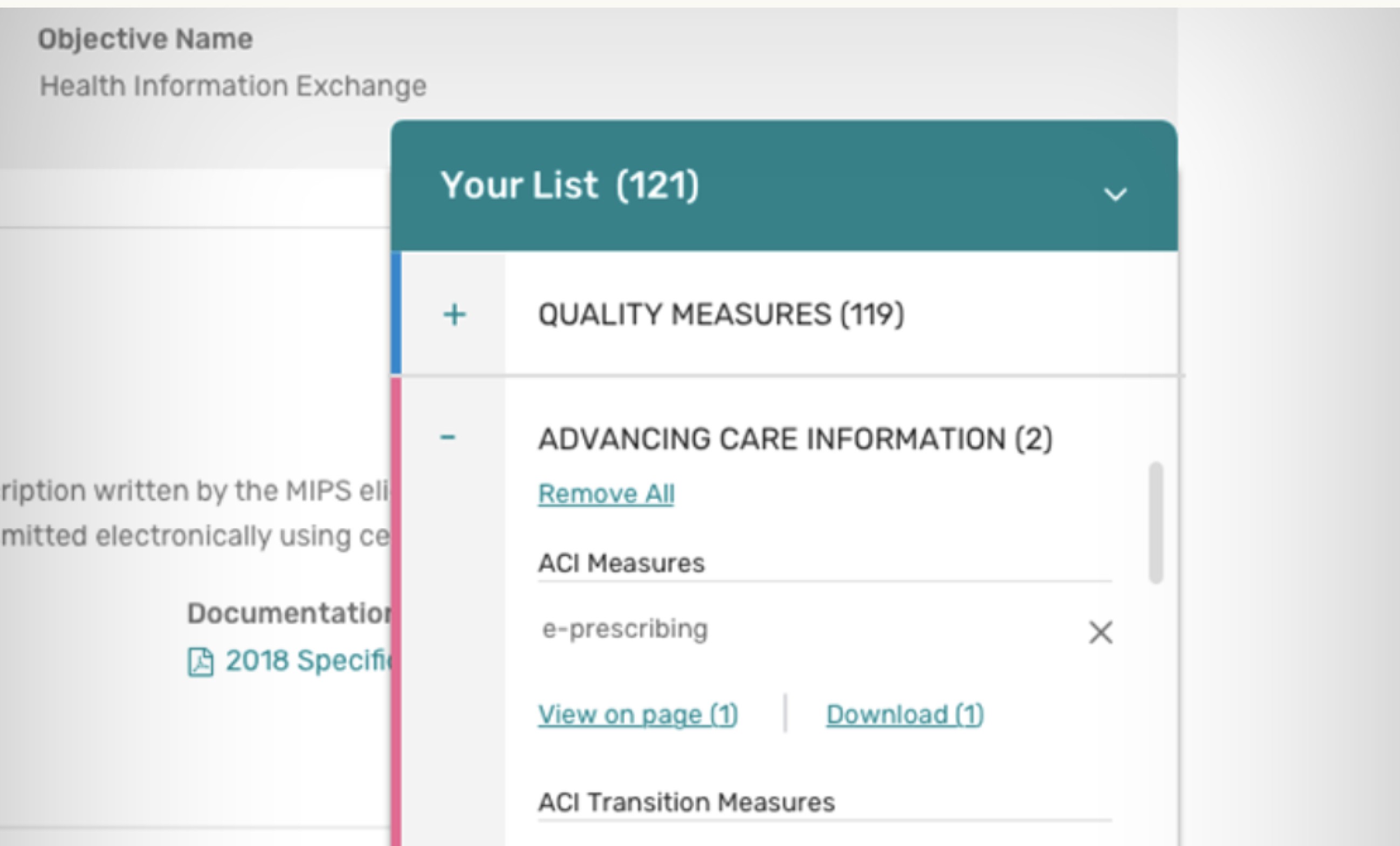
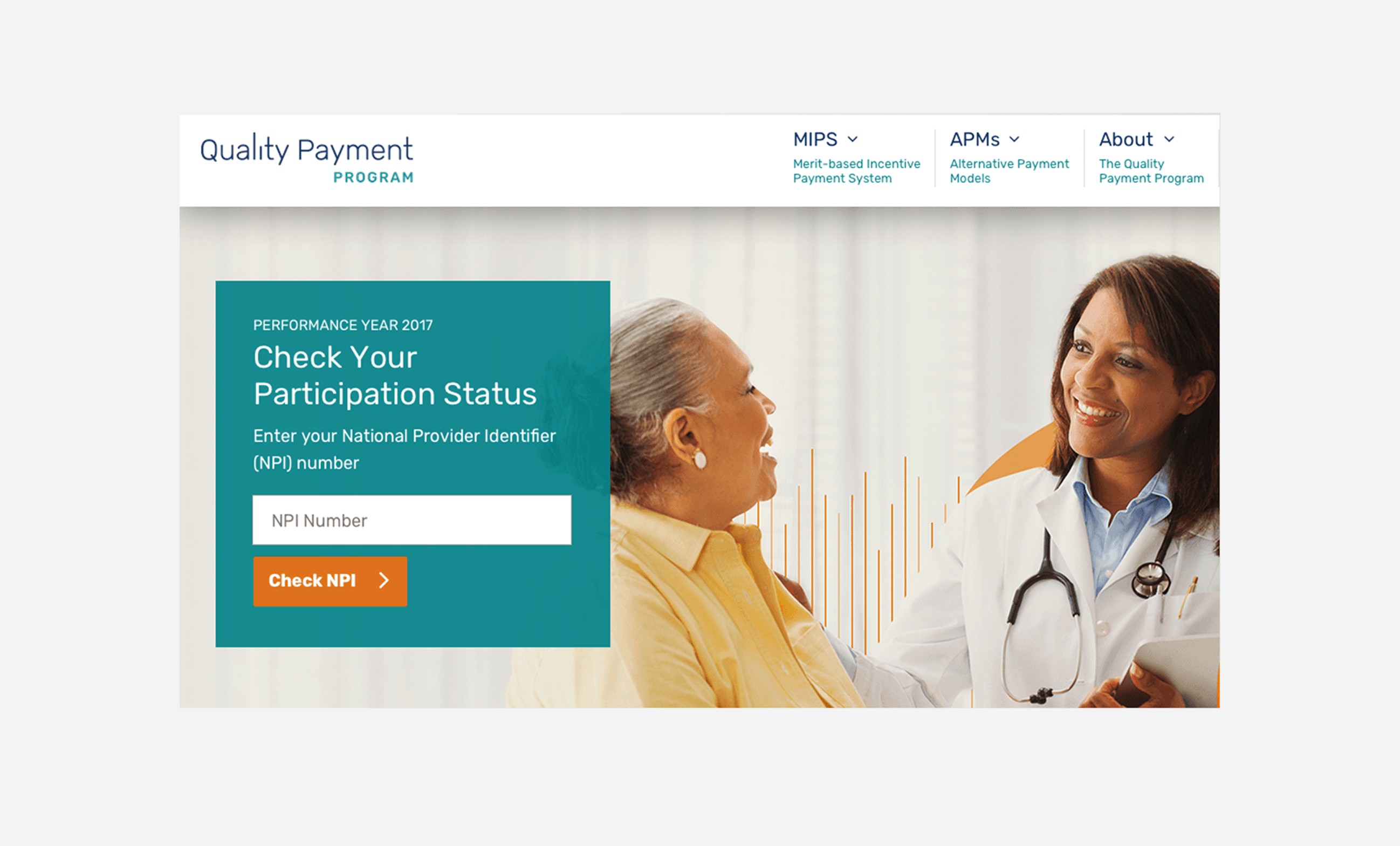
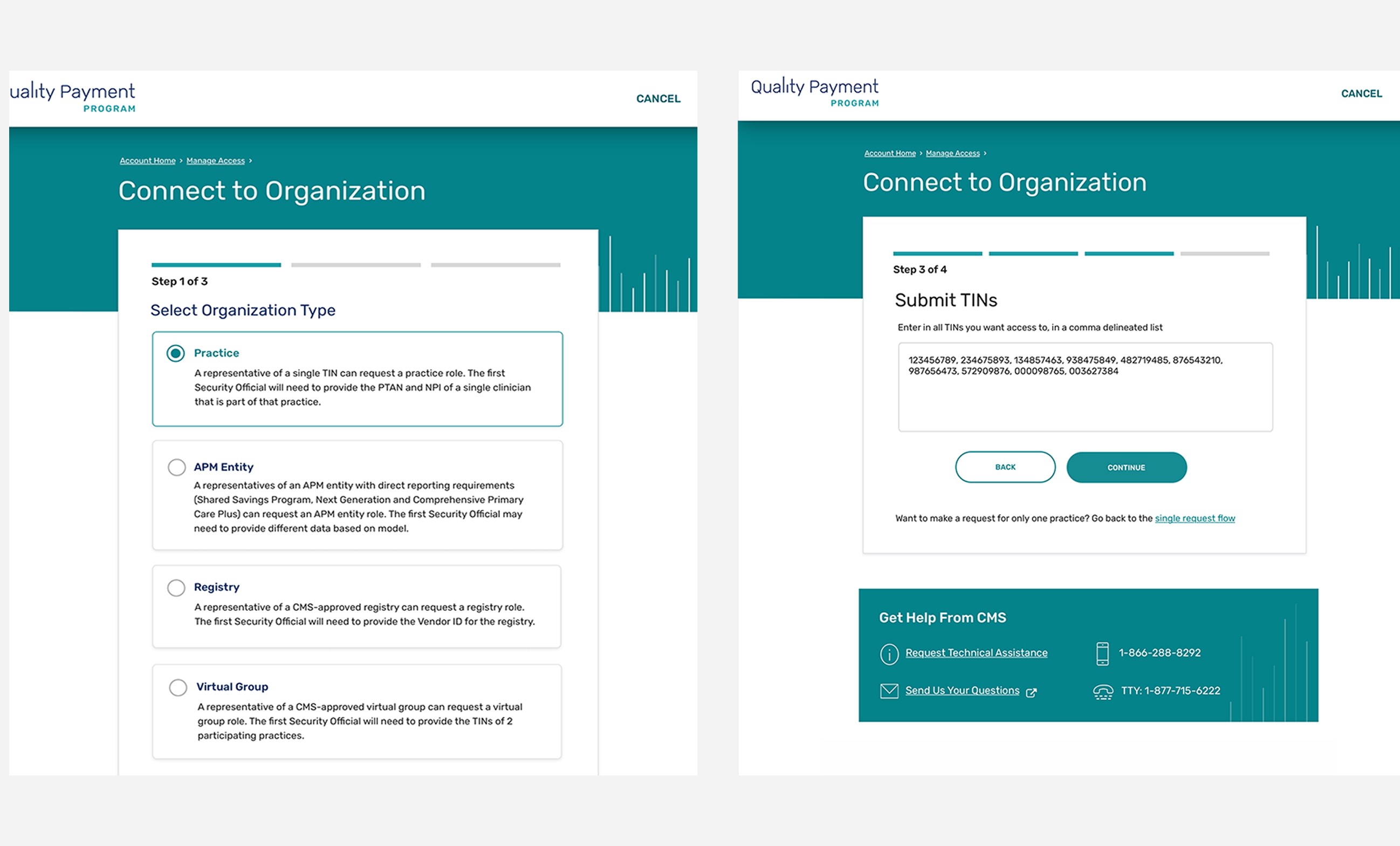
We built a reporting tool that felt like actual software, not a government form. Working across three agencies, we defined clear product outcomes and brand guidelines that prioritized ease, transparency, and incentives. The biggest challenge wasn't technical—it was cultural. Government tools typically focus on compliance over user experience. We had to prove that making reporting easier would improve data quality and program participation. Our approach used familiar patterns: simple login, shopping cart-style reporting, and clear progress indicators. We tested everything with real clinicians in an agile environment, iterating based on how people work, not how policy makers think they should work

OUTCOME
Government tool that users actually want to use
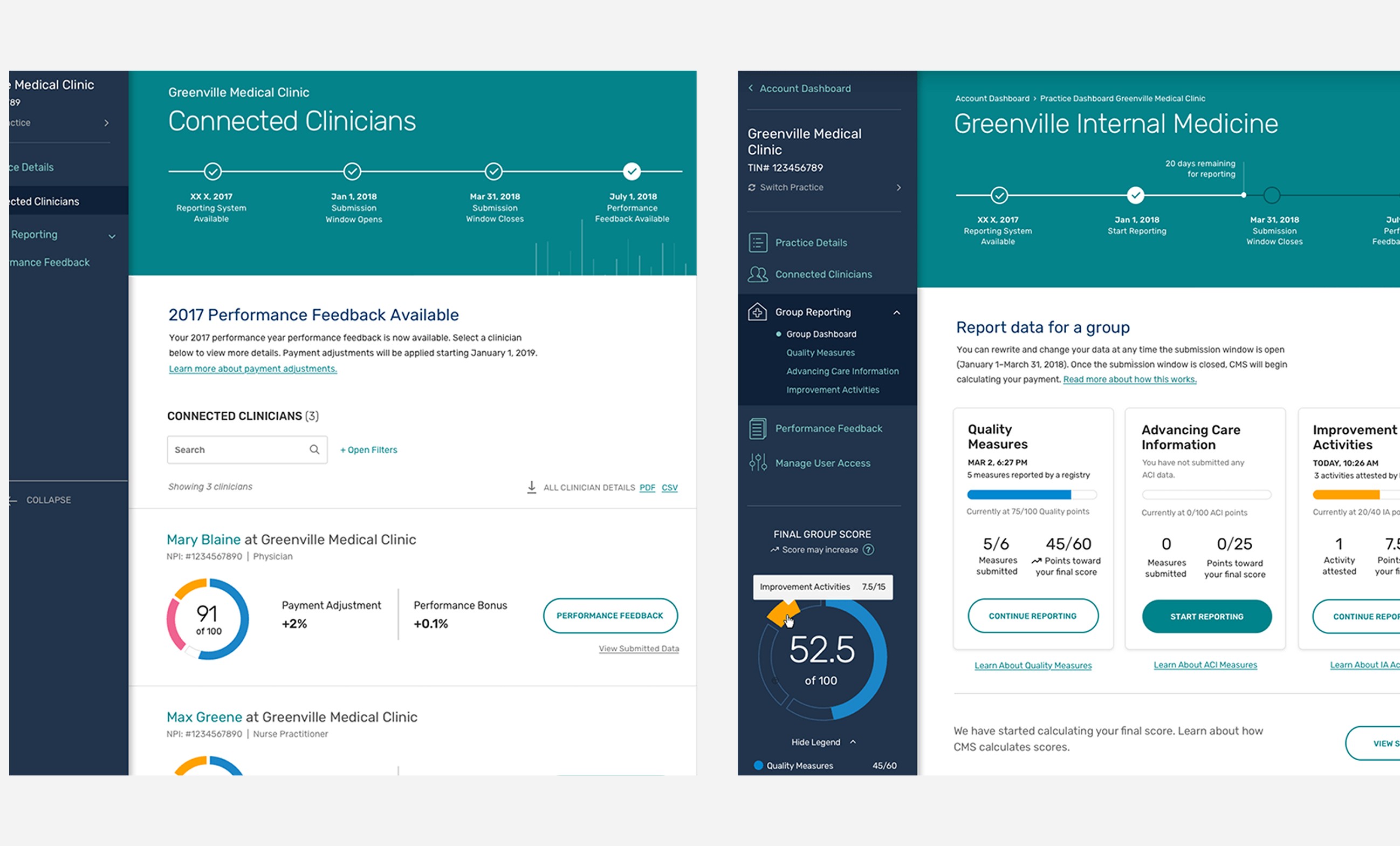
The platform served over 1.5 million users in two years and achieved the highest customer satisfaction scores of any online product created by the agency. More importantly, we proved that good design makes good policy work better. Clinicians could view aggregate performance, switch between multiple practices, and track deadlines without confusion. By making quality reporting feel manageable instead of punitive, we helped doctors focus on what matters: providing better care for their patients.